English
  Français
  Deutsch
  Nederlands
  Français
  English
  English
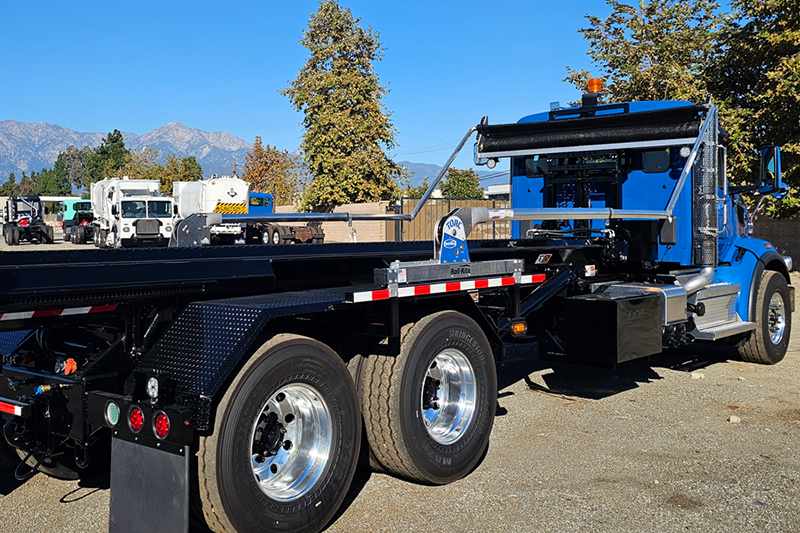
In the refuse industry, haulers need reliable tarp systems to transport heavy-duty loads like bulky waste and demolition debris. These systems must provide secure coverage for high-volume, abrasive loads, improve operational efficiency, and meet compliance regulations. With different container sizes and trailer configurations, choosing a refuse tarp system that matches your operation is essential for smooth operations.
Gantry tarp systems offer automated functionality, using a front-mounted tower to lift and position the tarp over containers for fast, secure coverage. Designed for single-axle hooklifts, multi-axle roll-offs, and larger container trailers, these systems are built for harsh environments and heavy use. Their automated operation helps streamline coverage, reduce manual handling, and keep daily hauling safe and efficient.
In this article, we’ll cover the features of gantry tarp systems for refuse waste applications and the considerations that can help you choose the right system for your hauling needs.
How Gantry Tarp Systems Make Refuse Transport More Efficient
Gantry tarp systems use a vertical tower at the front of the truck or trailer to lift the tarp assembly above the container. Electric or hydraulic power then extends the tarp across the load. This allows operators to quickly and easily cover high-volume refuse waste materials without manually handling the tarp.
The added gantry height creates clearance so the tarp can glide smoothly over heaped or irregular containers. This makes it easier to fully cover bulky or uneven loads and secure them with fewer adjustments.
Here are some ways gantry tarp systems help secure payloads in refuse waste applications:
• Elevated clearance for heaped loads: The gantry lifts the tarp housing above the container, so the tarp has room to clear debris as it moves over uneven or overfilled loads.
• Controlled movement across the container: Electric or hydraulic power extends the tarp in a uniform motion to help operators achieve consistent coverage across different container sizes and types of loads.
• Even coverage for abrasive or irregular materials: As the gantry lowers the tarp into place, the system automatically applies steady downward pressure to help contain abrasive, shifting, or loose materials during transit.
• Faster coverage with less manual handling: Operators can tarp from inside the cab or from a safe distance. This helps reduce physical strain and the time spent at each stop.
Factors to Consider Before Choosing a Gantry Tarp System for Refuse Waste
Refuse roll-off trucks and trailers carry an assortment of challenging residential and commercial debris, which is why it is crucial to have a tarp system that fits your truck or trailer configuration, load height, and type, and one that allows for quick and safe loading and unloading.
Some considerations to make before investing in a gantry tarp system for your refuse trucks or trailers include:
Gantry Height: The ideal gantry will hoist your tarp high enough to avoid dragging over sharp scrap while clearing bulky, uneven containers. Most gantry tarp systems lift the housing an average of eight to 12 feet, depending on the height and volume of the containers.
Vehicle Configuration: Hooklifts hauling similar container sizes can use some stationary tarp system configurations, but varying container sizes require adjustable coverage at different heights and lengths. Roll-off trailers hauling larger boxes require more durable mechanisms and higher gantry elevation.
Operating Mechanism: Gantry systems have hydraulic telescoping towers that may be powered with electric or hydraulic motors or controls. Adjustable pivot designs offer the most flexibility for high-volume or varying container sizes, while a fixed pivot is suited for the same or similar container sizes.
Clearance Requirements: Ensure the correct spacing between the cab and the front of the container or lift platform so the gantry can raise and lower without interference or strain on the tower assembly.
Tarp Material: Choose tarps made from durable and high-quality material that can withstand tears and punctures from abrasive materials. Several types of heavy-duty mesh tarps are commonly used to cover refuse waste because they are breathable and provide secure containment.
For more demanding applications like refuse waste and extreme demolition, Roll·Rite’s HD, Super Tough, and Super Tough Extreme heavy-duty mesh tarps feature thicker, reinforced materials designed for maximum durability and are the go-to tarp for refuse waste and demolition professionals.
If you’re looking for single or multi-axle hooklift pickup chassis and trailers for larger refuse waste containers, the Roll·Rite® DC Series is an excellent choice. It uses advanced power tarp technology to elevate the gantry and deploy the tarp with minimal operator effort. Black Box™ wireless controls are included with adjustable tarp system features and provide a 360-degree viewpoint for monitoring tarp operations, giving drivers real-time visibility and helping them avoid accidents.
For refuse waste haulers who prefer heavy-duty steel tarp systems, the Roll·Rite® ALC300 Series delivers reliable performance using existing truck hydraulic power for smooth, controlled movement over taller containers. It uses a hydraulic telescoping gantry that raises the tarp spool above the container before extending the tarp across the load. This series is suitable for roll-off or hooklift fleets with different container sizes using up to 32 feet of tarp.
The Right Gantry Tarp System Optimizes Fleet Operations and Investments
Investing in the right tarping solutions for refuse waste protects and ensures reliable load coverage and compliant operations. Automated gantry tarp systems reduce manual labor, making the loading and unloading process safer and quicker to reduce downtime risks and improve productivity. When selecting a system, choose options that offer easy installation, easy serviceability, easy access to original replacement parts, and compatibility with your tarp materials to keep operations running efficiently.
Look for advanced technology to further reduce downtime, speed maintenance repairs, and get the best return on investment over the life cycle of your fleet. Roll·Rite’s latest gantry tarp system, the DC800 Series, offers the longest life cycle and features an all-new TORC™ pivot technology that maintains tarp hold-down pressure, keeping the tarp virtually locked down over refuse waste containers in harsh weather or on rough roads. Learn more about the DC850 gantry tarp system for multi-axle roll-off and hooklift trucks on rollrite.com.
You may contact our experts directly for more product information, help choosing the right tarp system, estimates, or for help finding your authorized distributor. Consultations for tarp and safety solutions are also available through Roll·Rite's Tarp and Service Centers.
ABOUT THE AUTHOR

Keith Lowe
National Sales Manager, Refuse & Recycling
Keith is a waste industry veteran with over three decades of expertise who understands the importance of safety and the needs of industry professionals.