
 English
 Français
 Deutsch
 Nederlands
 Français
 English
 English

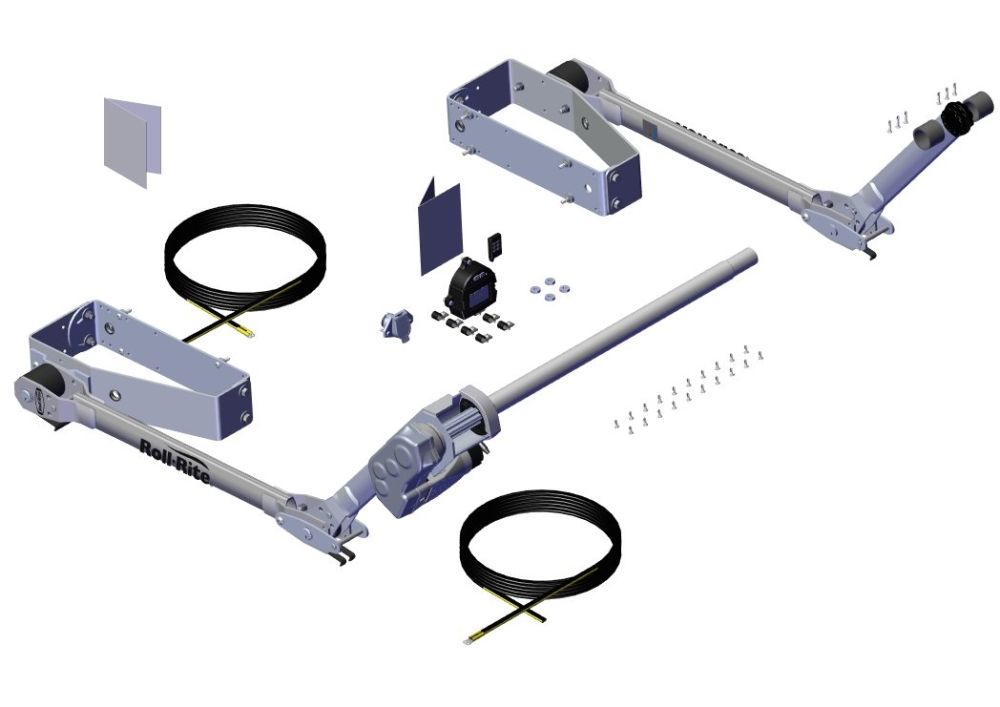
Electric tarp systems use electric or hydraulic mechanisms to deploy and retract the tarp with wired controls or wireless remote systems, making tarping faster and safer. Depending on the configuration, operators can cover and uncover loads from inside the cab or from a safe distance outside the vehicle.
The choice between wired and wireless remote systems depends on factors such as the vehicle, the type of load, and where the operator needs to be positioned to operate tarp deployment. In this article, we’ll discuss these factors, explain how each control option works, and explore the available options for different tarp systems.
How do Wireless and Wired Tarp Controls Work?
Electric tarp systems can cover loads in seconds, reducing the time spent tarping each load and helping speed up loading cycles. Drivers can operate the system using cab-mounted switches or wireless remote controls. Here’s an overview of how a tarp system's wired and wireless controls work:
Wireless Remote Systems
Wireless remote systems use a radio frequency (RF) receiver and handheld transmitter or key fob to operate the tarp. The receiver and control components are installed on the vehicle near the tarp motor, allowing the operator to control the tarp without a wired connection to a cab-mounted switch.
Wireless remote systems can be operated from outside or around the vehicle, giving operators walk-around visibility as the tarp deploys or retracts. This makes it easier to monitor tarp tension, coverage, and alignment.
Wireless remote systems can be a good option for fleets that frequently swap trailers. Drivers can connect to multiple separate trailers with a single handheld remote. Depending on your installation and system application, Roll·Rite wireless remote control can be programmed to operate up to three tarp units.
Wired or In-cab Switches
Wired tarp controls use a physical switch connected to the tarp system’s electrical circuit. The switch is installed inside the cab and allows the operator to deploy or retract the tarp with the push of a button or movement of a toggle switch.
The wired connection provides a direct control signal between the switch and tarp system, ensuring a strong and reliable connection. However, the fixed wiring limits the control to the vehicle it is installed on. Fleets that frequently change vehicles need compatible tarp systems for the in-cab switch to work with the truck or trailer body.
Featured Systems Sold Through Dealers
Wireless vs. Wired Tarp Controls: Which Is Better for Your Fleet
Vehicle Configuration
Before deciding between wired and wireless remote control systems, consider your vehicle configuration. If your fleet mostly uses fixed-body dump trucks, an in-cab wired system is probably best. The tarp system stays with the truck, so the control and wiring remain on the same vehicle. Roll-Rite’s TarpMaster Series for dump trucks uses an electric kit with a momentary rocker switch for in-cab operation. These automated, front-to-back arm-style tarp systems are specifically designed for bodies up to 34 feet long, with a maximum tarp length of 36 feet.
Trailer fleets may have different requirements. Trailers may be used with different tractors, and running control wiring between the tractor cab and long trailers can make installation complex and expensive. A wireless system means multiple drivers can program specific buttons on their remote.
Roll-Rite uses Rite·Touch technology for both dump and trailer configurations, with a hard-wired rocker switch inside the cab or a wireless key fob remote for operation from outside the vehicle. Operators do not need to hold the button down as the tarp moves. A single press runs the system through a full open or close cycle. The system automatically senses when the tarp reaches the lock-down rail or encounters an obstruction, shutting off the electrical current to help protect the motor and tarp. The Rite·Touch™ electric kit can be configured for either hard-wired or wireless control.
Roll-Rite’s STS Series with Rite-Lock™ technology is a side-to-side system available in configurations for grain, belly, end, transfer, and side dump trailers up to 53 feet. Its wireless controls allow the operator to use a side-to-side tarp wireless remote from outside the vehicle when needed.
Load Application
Consider your payload application and tarping configuration. Level loads such as sand, gravel, and asphalt generally require less monitoring during tarp operation. Taller, uneven, or heaped loads may require outside visibility so the operator can check coverage and make sure the tarp clears the load as it deploys or retracts.
When hauling heaped loads such as grain and silage, the Roll-Rite GTX550 Electric Tarp Conversion Kit allows operators to operate the tarp from inside the cab or around the trailer. The kit includes a wireless remote that gives operators outside visibility as the tarp climbs heaped loads, with synchronized dual arms carrying the tarp axle over peaked loads. Other STS Series Lock Down electric tarp system applications, may be available with an optional RF receiver and key fob for wireless tarp operation.
Improve Hauling Safety and Efficiency With Electric Tarp Systems
Electric tarp systems improve safety because they can be operated from the cab or a safe standing position, eliminating the need for manual tarp handling. Consider your fleet requirements, such as dump trucks or trailers, and load application when choosing between in-cab and wireless remote controls.
FAQs
Can I use both wired and wireless controls on the same vehicle?
Yes. Rite·Touch electric kits can use a hard-wired in-cab rocker switch and can be expanded with an RF receiver module for wireless control.
Can I add a wireless remote to an existing electric tarp system?
Yes, some Roll-Rite electric tarp systems can be upgraded with an RF receiver and wireless transmitter. The specific kit and system configuration determine what can be added.
How far can the Roll-Rite GTX550 remote operate?
The GTX550 wireless remote has an operating range of up to 150 feet. It can operate the tarp from inside the cab or around the trailer.
Consultations for tarp and safety solutions are available through Roll-Rite's Safe Fleet Service Centers. You may contact our experts directly for quotes, product information, or help finding your authorized distributor.
ABOUT THE AUTHOR

Gary Viall
Director of Sales, Covering Solutions
Gary Viall has over 26 years of sales experience and is an expert in covering solutions for trailers.
